
Cheap Chinese Night Vision— Hidden Gem or Overhyped?
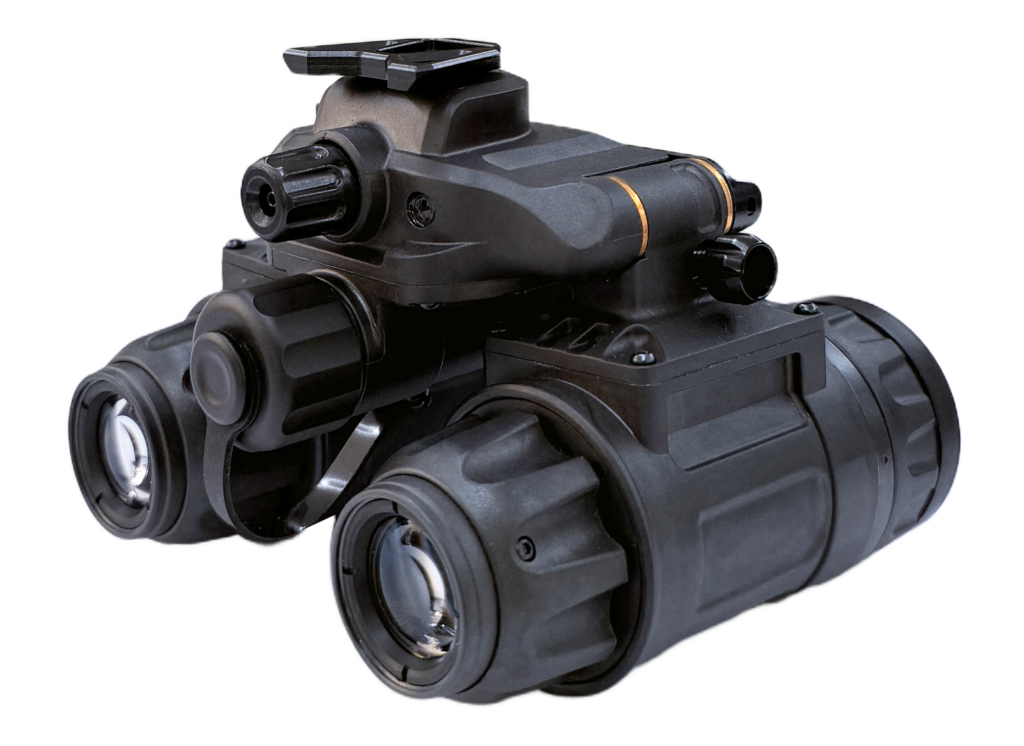
Today, we are looking at one of those options: the QCNV QVS3150 binocular night vision goggle.
This is not a “rich collector only” type of device. It is aimed more at buyers who want a wide field of view, a lightweight binocular experience, flexible tube options, and a total cost that is much easier to accept than many American monocular setups.
Why Is “Cheap Chinese Night Vision” Suddenly Getting So Much Attention?
The real question people are asking is simple:
Can a Chinese binocular NVG give you a real analog night vision experience for less money?
For B2B buyers, the answer is not just about the lowest price. You need to look at three core parts:
| Core Part | Why It Matters |
|---|---|
| Image Intensifier Tube | Directly affects low-light performance, brightness, clarity, and price level |
| Optical System | Affects FOV, distortion, glare, eye comfort, and edge clarity |
| Housing Design | Affects weight, helmet balance, auto-off reliability, and wearing comfort |
The QVS3150 follows this logic. It is not trying to win attention by shouting about one single spec. Instead, it offers a complete binocular package: 50° wide FOV, helmet mounting, flip-up and side-roll auto-off, 850nm auxiliary IR, strong light protection, low voltage alarm, and multiple FOM tube options.
So, What Exactly Is the QVS3150?
In simple terms, the QVS3150 is a compact binocular analog night vision goggle with 1x magnification and a 50°±2° field of view. It is designed for helmet-mounted use and two-eye observation.
Basic Specifications
| Item | Specification |
|---|---|
| Product Type | Binocular Night Vision Goggle |
| Image Intensifier | GEN2+ FOM1400+ / GEN3 Optional |
| Resolution | 60 / 64 / 68 lp/mm |
| Field of View | 50°±2° |
| Magnification | 1x |
| Optical Distortion | <2% |
| Relative Illumination | >70% |
| Focus Range | 50mm to Infinity |
| Diopter Adjustment | +2D to -6D |
| Eye Relief | 25mm |
| Exit Pupil Diameter | 14mm |
| Auxiliary IR | 850nm, 20mW |
| Power Supply | CR123A / AA |
| Working Time | Around 20h |
| Actual Weight | 450g |
| Waterproof Level | IP65 / IP67, version to be confirmed |
| Functions | Flip-up auto-off, side-roll auto-off, low voltage alarm, strong light protection |
| Custom Support | OEM / ODM |
The price of the QVS3150 changes depending on the built-in tube FOM value. Higher FOM means a more expensive tube, so the full unit price naturally goes up. But overall, the purchase cost is still more attractive than many high-end American monocular systems.
The 50° FOV Is the Feature That Really Stands Out
A lot of traditional night vision devices give you that classic “looking through a tube” feeling. The view is narrow, and you have to keep turning your head to scan the environment.
The QVS3150 pushes the field of view to 50°±2°. Compared with common 40° systems, that extra viewing area makes a real difference.
| What 50° FOV Brings | What It Means in Real Use |
|---|---|
| Wider viewing area | Less head movement when scanning |
| Less tunnel vision | More comfortable for longer use |
| Better situational awareness | Easier to understand your surroundings while moving |
| More natural binocular view | Much more comfortable than single-eye observation |
For distributors and wholesale buyers, 50° FOV is also an easy selling point. You do not need to explain a wall of technical terms. Customers understand it right away:
Wider view. Less tunnel effect. More comfortable observation.
Tube Options: GEN2+ FOM1400+ Usually Comes in Under USD 3,000
The QVS3150 can be configured with GEN2+ FOM1400+, which usually places it under USD 3,000 depending on the final configuration. Buyers can also choose other FOM levels or move up to GEN3 options based on market needs.
One thing needs to be clear: GEN2+ and GEN3 are not the same in very low-light conditions.
In general, a higher-grade tube usually means stronger light amplification, a brighter image, better signal-to-noise performance, and better usability in darker environments. So for wholesale buyers, the smartest move is not always “go for the highest spec.” It is to match the tube level with the target market and budget.
Tube Selection Guide
| Buyer Need | Suggested Configuration |
|---|---|
| Entry-level wholesale projects | GEN2+ FOM1400+ |
| Better image clarity | Choose a higher-resolution tube |
| Better very-low-light performance | Move up to GEN3 |
| Price-sensitive markets | Balance FOM and total unit cost |
| Review or comparison content | Ask for real image videos and test photos |
The final QVS3150 price changes with the selected FOM value. That is normal. In a real analog night vision device, the image intensifier tube is one of the most expensive core components.
Auxiliary IR and Practical Features
The QVS3150 includes a built-in 850nm, 20mW auxiliary IR illuminator. In very dark environments where ambient light is not enough, it gives the image intensifier a little extra help.
Other useful functions include:
| Function | What It Does |
|---|---|
| Low Voltage Alarm | Reminds the user when battery level is low |
| Strong Light Protection | Helps protect the device from sudden bright light |
| Flip-up Auto-off | Saves power when the NVG is raised |
| Side-roll Auto-off | Useful for binocular pod movement |
| Around 20h Working Time | Practical for longer sessions, depending on battery and usage |
These are real user-experience features. For distributors, they also make the product easier to explain in catalogs, product pages, and sales conversations.
Unboxing and Packing List
For B2B orders, packaging matters. It affects shipping safety, delivery experience, and after-sales communication.
| Packing Item | Quantity |
|---|---|
| Night Vision Goggle | 1 |
| Mount | 1 |
| Lens Caps | 4 |
| Manual | 1 |
| Cleaning Cloth | 1 |
| Packing Box | 1 |
The actual package uses a hard protective case with custom foam inserts. The device, mount, and accessories each have their own space, which helps keep everything protected and organized during transport.
For the past few years, the night vision community has been waiting for one thing:
When are we finally getting real night vision that does not cost an insane amount of money?
But reality has been pretty brutal. Analog night vision is still expensive, especially when you start talking about high-performance image intensifier tubes, decent glass, and a solid housing. Anyone who has spent time in the NVG world knows the big cost drivers: the housing, the optics, and the intensifier tube.
And once you move from a monocular to a binocular setup, the cost jumps fast. Two tubes, two optical channels, and a more complicated housing — that is where the money goes.
That is exactly why more overseas buyers are starting to pay attention to Chinese night vision devices. Not just because they are cheaper, but because some of them are starting to hit a much more realistic balance between price, weight, field of view, features, and actual analog night vision performance.
Housing and Wearing Experience: 450g, But Is It Stable?
The QVS3150 uses a compact binocular housing and supports helmet mounting. The actual measured weight is 450g.
For a binocular NVG, that weight sits in a practical range. It is light enough for longer wearing sessions and movement-based observation without feeling overly front-heavy.
The part worth highlighting is the flip-up auto-off and side-roll auto-off.
In real movement testing, the QVS3150 can shut off properly when flipped up or rolled to the side. More importantly, during running tests, it stayed stable without random shut-offs or image flickering.
That matters a lot.
Some budget binocular NVGs look good on a spec sheet, but once you actually wear them and start moving, the auto-off function may misfire. Random flickering, sudden shut-off, unstable sensors — that can ruin the experience fast.
For a real-world NVG, auto-off should not just exist. It should work reliably.
Wearing and Auto-Off Performance
| Item | Result |
|---|---|
| Helmet Mounting | Supported |
| Flip-up Auto-off | Supported, stable |
| Side-roll Auto-off | Supported, stable |
| Running Stability | Excellent, no abnormal shut-off reported |
| Actual Weight | 450g |
| Housing Style | Compact binocular design |
Optics: Low Distortion and Comfort Matter More Than People Think
A good night vision device is not just about the tube. The optical system can make or break the experience.
Budget NVGs often fail in places that do not always show up clearly on a product page: heavy edge distortion, annoying glare, uncomfortable eye positioning, or a field of view that looks good on paper but feels bad in use.
The QVS3150 comes with the following optical specs:
| Optical Item | Specification |
|---|---|
| Optical Distortion | <2% |
| Relative Illumination | >70% |
| Eye Relief | 25mm |
| Exit Pupil Diameter | 14mm |
| Lens Coating | Ultra-wideband multi-layer anti-reflection coating |
These numbers show that the QVS3150 is not just two tubes placed into a housing. It pays attention to FOV, distortion control, and viewing comfort.
For B2B buyers, this is important because optical comfort directly affects end-user feedback. Even if a customer does not understand every technical term, they will know very quickly whether the device feels good on the eyes.
QVS3150 vs High-End American Monocular: Which One Makes More Sense?
The debate between a “cheap Chinese binocular” and a “high-end American monocular” is not about one completely destroying the other.
It depends on what you actually need.
With the same budget, a high-performance monocular may give you a stronger single tube. But a monocular is still a one-eye device. For longer use, movement, and overall comfort, binocular night vision is simply a different experience.
Binocular NVGs offer a more natural two-eye view, better wearing comfort, and stronger environmental awareness.
| Option | Main Advantage | Main Limitation |
|---|---|---|
| High-End Monocular NVG | Stronger single-tube performance may be possible | One-eye viewing, less comfortable for long use |
| Lower-Cost Binocular NVG | More natural two-eye viewing | Tube performance depends on selected FOM |
| QVS3150 | 50° FOV, 450g weight, binocular design, flexible FOM options, stable auto-off | Low-light performance depends on tube grade |
So yes, if the only goal is to get the strongest possible low-light performance within a fixed budget, a high-end monocular still has its place.
But if you care more about binocular comfort, wider FOV, movement use, lower purchase cost, and flexible product-line planning, the QVS3150 is absolutely worth a closer look.
Final Take: Cheap Does Not Mean Toy
In the past, when people heard “cheap Chinese night vision,” they often assumed compromise.
That perception is changing.
The QVS3150 is not trying to replace every high-end NVG on the market. Instead, it gives buyers a very practical option:
A 450g lightweight binocular NVG with 50° wide FOV, real analog image intensifier tubes, stable flip-up and side-roll auto-off, solid running stability, and a price direction that is more friendly than many American monocular setups.
For B2B buyers, the real question should not be:
“Is it cheap?”
The better question is:
“Do the tube performance, optical system, housing design, feature stability, pricing, and supply flexibility fit my target market?”
If you want a binocular night vision device that is not toy-grade, but also does not throw you straight into the high-cost American NVG market, the QVS3150 is definitely worth serious consideration.