
QCNV 2026 Night Vision Production Plan
Manufacturing Perspective · China Factory
Table of Contents
Chapter 1. Introduction
2026 Production Snapshot
Monthly IIT Capacity: ≈ 2500 units
High-Performance Focus: FOM ≥ 1800
Housing Inventory for C-end: ~100 sets / month
Manufacturing Base: China
Why We Are Sharing Our 2026 Night Vision Production Plan
As global demand for night vision equipment grows, professional buyers are focusing more on product details. They also care about manufacturing ability, stable production, and reliable long-term supply. For military units, professional distributors, and outdoor equipment companies alike, understanding how and where night vision devices are produced has become an essential part of procurement decision-making.
As a manufacturer in China, we focus on image intensifier tubes (IITs) and night vision devices. We believe that being open about our production plans is key for lasting partnerships.
This article shares our 2026 night vision production plan. It looks at the factory view, not just finished products. We will cover key parts, how we make them, and the final assembly process.
China is important in the global night vision supply chain. It excels in precision manufacturing, scalable assembly, and cost-effective production. However, production capability varies widely between suppliers.
We share our annual production strategy to help partners understand how we allocate capacity. We also explain how we manage quality and control delivery risks throughout the year.
This 2026 production plan focuses on three core areas:
Image intensifier tube manufacturing, as the optical core of low-light night vision systems
Night vision housing and structural components, which determine durability and compatibility
System-level assembly and testing, ensuring stable performance before delivery
This overview aims to help professional buyers, OEM partners, and long-term clients plan better. We want to assist with procurement timelines, customization projects, and inventory strategies for the coming year.
Chapter 2. 2025 Review
Key Production and Delivery Lessons from the Past Year
Before outlining our 2026 production plan, it is necessary to review the practical experience gained throughout 2025. In the past year, the demand for night vision equipment has changed. Order structures and delivery expectations have also shifted. These changes have increased the need for better manufacturing coordination and production discipline.
2025 were many smaller orders, more varied specifications, and stricter delivery deadlines. These changes directly influenced how we optimized our production workflow.
2.1 Demand Structure and Order Characteristics in 2025
In 2025, customer demand showed three clear characteristics:
- Increased demand for image intensifier tubes as standalone components
- More professional buyers and system integrators requested IITs separately, either for local assembly or system upgrades.
- Growth in small-to-medium batch orders
- In 2025, there were more pilot orders, phased procurement, and mixed-specification batches. This is different from earlier years, which had large-volume contracts.
- Higher expectations for specification consistency
- Buyers looked more at factors like FOM range, phosphor type, and batch uniformity. They did not just focus on peak performance values.
These changes required tighter coordination between component manufacturing and final assembly.
2.2 Production Challenges Identified in 2025
Throughout the year, several challenges became increasingly clear:
- Specification diversity increased production complexity
- Producers must create multiple IIT configurations and housing types in parallel, which increases the importance of precise scheduling.
- Delivery pressure from overlapping production cycles
- Orders with different lead times often overlapped, making traditional linear production planning less effective.
- Quality consistency across batches became a core concern
- Even small variations in image performance or mechanical tolerance could affect customer acceptance at the professional level.
Rather than expanding capacity blindly, we focused on improving process control and allocation efficiency.
2.3 Key Improvements Implemented During 2025
Based on real production feedback, several improvements were implemented during the year:
- Clear separation of production lines
- Image intensifier tube manufacturing, housing production, and final assembly were scheduled with clearer boundaries to reduce interference.
- Stronger batch-based quality control
- Each production batch was managed as a traceable unit, with performance screening and test records linked to delivery.
- Improved coordination between component readiness and assembly
- Assembly schedules were adjusted only after core components passed internal inspection, reducing rework and delays.
- More realistic lead-time commitments
- Delivery timelines were aligned with actual production capacity rather than optimistic estimates, improving overall on-time delivery rates.
2.4 Delivery and Supply Chain Insights
From a delivery standpoint, 2025 reinforced several important principles:
- Stable supply depends more on planning disciplinethan on maximum output
- Transparent communication with buyers reduces last-minute changes and production risks
- Buffer capacity is more effective when applied to core components, especially image intensifier tubes
These insights directly shaped how we designed our 2026 production structure.
2.5 Lessons Carried Forward into 2026 Planning
The experience gained in 2025 led to a clear conclusion:
Sustainable night vision manufacturing is built on consistency, controllability, and realistic capacity planning.
Rather than pursuing aggressive expansion, our 2026 plan focuses on:
- Better allocation between IIT production and system assembly
- Improved batch stability
- More predictable delivery cycles for long-term partners
These principles form the foundation of the 2026 production strategy outlined in the following chapters.
Chapter 3. 2026 Overall Production Planning Overview
[ Planning Highlights ]
✔ Fixed pr oduction rhythm
✔ Dual-track capacity
✔ Assembly driven by readiness
✔ Inventory protected
The goal for 2026 is to focus on steady output. We want to improve quality and availability for different customer groups. Instead of growing quickly, we aim for consistent growth.
The production framework has two main parts: making image intensifier tubes and assembling night vision device housings and systems.
3.1 Image Intensifier Tube Production Planning for 2026
Image intensifier tubes are the main part of low-light night vision systems. They are crucial for capacity planning.
For 2026, our planned output for image intensifier tubes is:
- Estimated monthly capacity:approximately 2,500 tubes
- Production structure:
- Standard performance tubes for stable batch supply
- Increased allocation for high-performance tubes with FOM above 1,800
Compared with previous years, a larger portion of capacity will be reserved for higher-performance specifications. This change comes from feedback from professional buyers. They want better resolution, signal-to-noise balance, and batch consistency. They need these features more than just peak parameters.
To support this structure, production scheduling in 2026 emphasizes:
- Stable monthly output rather than irregular batch spikes
- Clear separation between standard and high-performance screening processes
- Priority allocation of high-performance tubes to confirmed orders and long-term partners
This approach allows us to maintain output predictability while gradually increasing the share of higher-specification products.
3.2 Night Vision Housing and Structural Component Planning
The team plans night vision housings and parts using a two-track strategy. This will help both large clients and individual buyers.
- B2B customer capacity:
- Large customers set the production capacity for housing in advance. This relies on confirmed orders and long-term agreements.
- C-end inventory allocation:
- We will reserve production resources to keep about100 complete housing sets ready to ship each month. This is in addition to our pre-booked B2B capacity for business customers.
This structure ensures that:
- Large customer orders are not affected by short-term retail demand
- C-end buyers have access to stable stock availability without long waiting periods
- Assembly lines can operate with greater continuity and fewer interruptions
3.3 Assembly Capacity Coordination
System-level assembly in 2026 will depend on when core components are ready. It will not follow strict calendar deadlines.
Key coordination principles include:
- Assembly schedules aligned with verified image intensifier tube batches
- Priority given to confirmed configurations to reduce rework
- Separate workflows for bulk orders and inventory-based assembly
By aligning assembly capacity with component availability, overall delivery predictability is improved without increasing unnecessary stock pressure.
3.4 Planning Logic for Balanced Supply
The 2026 production structure reflects a deliberate balance:
- Between performance upgrades and production stability
- Between B2B contractual orders and C-end availability
- Between capacity utilization and quality control
Instead of focusing on maximizing monthly output, the goal is to keep a steady production rhythm. This rhythm helps ensure consistent quality, reasonable lead times, and long-term cooperation.
3.5 Transition to Detailed Component and Assembly Planning
The 2026 production structure reflects a deliberate balance:
- Between performance upgrades and production stability
- Between B2B contractual orders and C-end availability
- Between capacity utilization and quality control
Instead of focusing on maximizing monthly output, the goal is to keep a steady production rhythm. This rhythm helps ensure consistent quality, reasonable lead times, and long-term cooperation.
Chapter 4. 2026 Image Intensifier Tube Production Plan
Image intensifier tubes are the main part of low-light night vision systems. They are crucial for performance, stability, and reliability.
In 2026, we plan our production of image intensifier tubes with one main goal. We want to keep a steadymonthly output. At the same time, we aim to slowly increase the number of high-performance tubes we produce.
– The goal is not to quickly increase production.
– The focus is on careful manufacturing.
– There are steady screening standards.
– Reliable supply is important for professional users.
4.1 Monthly Output and Capacity Structure
For 2026, our image intensifier tube production is planned with a stable monthly capacity of approximately 2,500 units. We distribute this capacity across different performance levels to meet diverse application requirements.
The overall structure includes:
- Standard-performance tubes designed for stable batch supply and system integration
- An increased allocation for high-performance tubes with FOM above 1,800, reflecting growing demand from professional and institutional buyers
By keeping a steady monthly production schedule, we lower the risks of batch changes. This helps make assembly and delivery times more predictable.
4.2 Expansion of High-FOM Tube Capacity
One of the key adjustments in 2026 is the intentional increase in high-FOM tube output.
Based on past orders and technical feedback, the demand for FOM ≥ 1,800 tubes keeps increasing. This is especially true for applications that need:
- Higher resolution consistency across batches
- Improved signal-to-noise performance
- More stable low-light imaging in complex environments
To support this shift, production planning prioritizes:
- Dedicated screening and grading windows for high-performance tubes
- Tighter internal acceptance thresholds for optical consistency
- Reserved capacity for long-term partners and confirmed projects
This approach ensures that performance improvements are achieved without compromising overall production stability.
4.3 Manufacturing Flow and Quality Control Logic
While specific manufacturing processes remain proprietary, the 2026 plan emphasizes process discipline rather than process expansion.
Key production principles include:
- Batch-based manufacturing with defined performance ranges
- Multi-stage inspection and screening before final classification
- Separation between production output and delivery allocation to prevent premature shipment
We treat each tube batch as a separate unit. This allows us to keep performance data and inspection records for future use. This structure supports both internal optimization and after-sales traceability.
4.4 Allocation Strategy Between Different Customer Types
In 2026, the production of image intensifier tubes will rely on two main factors. First, it will depend on how clear the orders are. Second, it will depend on how stable the cooperation is. The evaluation will not consider only the size of the orders.
- Confirmed B2B projects and long-term partners receive prioritized allocation, particularly for high-FOM specifications
- OEM and system integrators benefit from batch consistency planning aligned with their assembly cycles
- Flexible allocation is maintained for testing, evaluation, and phased procurement orders
This allocation logic reduces delivery uncertainty and supports sustained cooperation rather than one-time transactions.
4.5 Integration with System Assembly Planning
Image intensifier tube production in 2026 is closely synchronized with downstream system assembly.
Key coordination points include:
- Assembly schedules aligned with screened and approved tube batches
- Performance matching between tubes and housing configurations
- Reduced rework risk through early-stage parameter confirmation
By aligning tube production with assembly readiness, overall delivery lead times remain controllable even during peak periods.
4.6 Role of IIT Production in Long-Term Manufacturing Strategy
The 2026 image intensifier tube production plan reflects a broader manufacturing philosophy:
performance growth must be supported by controllable processes and stable output.
We balance monthly capacity and increase high-performance availability. We also maintain strict quality standards. Our goal is to give professional buyers a reliable base for long-term purchasing and system development.
Chapter 5. 2026 Night Vision Housing and Structural Component Production Plan
Night vision housings and structural components form the mechanical foundation of the entire system. While image intensifier tubes define optical performance, housing design and manufacturing directly affect durability, assembly consistency, and long-term reliability.
For 2026, our housing production plan focuses on structural standardization, predictable output, and balanced capacity allocation between large-volume clients and inventory-based supply.
5.1 Housing Types and Structural Planning
In 2026, housing production is organized around commonly used system structures to ensure compatibility and assembly efficiency.
Key planning directions include:
- Support for monocular and binocular housing configurations
- Structural compatibility with mainstream mounting interfaces
- Emphasis on balanced weight distribution and mechanical stability
We do not make many big changes. Instead, we improve designs that work well in real situations and production.
5.2 Manufacturing Processes and Capacity Allocation
Housing and structural component manufacturing follows a two-tier capacity allocation model.
- Pre-booked capacity for large B2B clients
- Production resources required by confirmed customer orders are allocated in advance to ensure delivery reliability and assembly continuity.
- Reserved capacity for inventory-based production
- Each month, we set aside some capacity. This helps us keep about100 complete housing sets ready to ship for C-end customers.
This approach allows housing production to remain continuous while avoiding conflicts between project-based and inventory-based demand.
5.3 Material Selection and Structural Consistency
To ensure repeatable assembly results, material selection and dimensional control are treated as core production priorities.
Key considerations include:
- Stable material sourcing to avoid variation between batches
- Controlled tolerances for mating surfaces and mounting interfaces
- Surface treatment consistency to support durability and corrosion resistance
All structural components are manufactured under fixed dimensional standards to minimize fitting adjustments during final assembly.
5.4 Coordination Between Housing Production and Assembly
Housing production in 2026 is closely synchronized with system assembly planning.
Coordination principles include:
- Housing batches released for assembly only after dimensional verification
- Matching housing availability with screened image intensifier tube batches
- Separate assembly flows for bulk orders and inventory-based builds
This coordination reduces bottlenecks and supports a steady assembly rhythm throughout the year.
5.5 Support for Customization and OEM Requirements
While standardization remains the priority, the 2026 plan retains flexibility for customization where required.
Customizable elements include:
- External finish and labeling
- Interface compatibility within defined structural limits
- Packaging configurations for different sales channels
Customization requests are scheduled within dedicated capacity windows to prevent disruption to standard production runs.
5.6 Role of Structural Manufacturing in 2026 Supply Stability
The housing and structural component production plan for 2026 reflects a broader manufacturing objective:
mechanical consistency enables optical performance to be fully realized at the system level.
Housing production can manage large projects and urgent needs. This is possible by maintaining a steady capacity, using reliable materials, and keeping a consistent inventory. The process does not compromise quality.
Chapter 6. 2026 Night Vision System Assembly and Testing Plan
6.1 Assembly Line Structure and Workflow Design
For 2026, assembly operations will follow a modular workflow. This structure will support different order types and keep production steady.
Key characteristics include:
- Separate assembly paths for monocular, binocular, and inventory-based builds
- Modular sub-assembly stations for optics, housing, and electronic components
- Flexible manpower allocation to adapt to batch size variation
This structure allows the assembly line to handle both confirmed bulk orders and ready-to-ship inventory in parallel.
6.2 Assembly Scheduling Based on Component Readiness
Assembly scheduling is driven by component readiness rather than fixed calendar targets.
Key principles include:
- Assembly begins only after image intensifier tubes pass internal screening and classification
- Housing components are released to assembly after dimensional verification
- Configuration confirmation is completed prior to final assembly to reduce rework
By aligning assembly timing with verified components, the risk of downstream delays is reduced.
6.3 Functional and Performance Testing Framework
Every assembled night vision device undergoes a structured testing process before release.
The testing framework includes:
- Optical performance verification under controlled low-light conditions
- Mechanical stability checks following assembly
- Functional testing of power, controls, and system response
Testing is conducted at defined checkpoints to ensure consistent evaluation across different batches and configurations.
6.4 Environmental and Reliability Checks
Where applicable, additional verification is conducted to confirm operational stability.
This may include:
- Temperature adaptability checks
- Vibration and handling stability evaluation
- Extended operation observation for system consistency
These steps help identify potential issues before shipment and support long-term reliability in field use.
6.5 Quality Documentation and Traceability
In 2026, traceability remains a core requirement across assembly and testing operations.
Key elements include:
- Batch identification linking tubes, housings, and final systems
- Recorded test results associated with each production batch
- Retained assembly and inspection records for after-sales support
This system enables efficient quality analysis and supports transparent communication with partners when required.
6.6 Assembly as a Stability-Oriented Process
The 2026 assembly and testing plan reflects a manufacturing philosophy focused on consistency over speed.
By keeping organized workflows, tested procedures, and clear records, assembly operations help ensure timely deliveries and dependable product performance. This is important for professional users and long-term partners.
Chapter 7. 2026 Customization and OEM / ODM Production Arrangement
Customization and OEM / ODM cooperation play an important role in professional night vision manufacturing. In 2026, we have a new way to make products. Our method focuses on one main idea. Flexibility is important, but it must fit within a controlled and predictable manufacturing system.
Rather than treating customization as an exception, the team integrates it into the overall production plan through defined capacity allocation and standardized interfaces.
7.1 Scope of Customization Supported in 2026
Customization in 2026 focuses on elements that can be reliably controlled without affecting system stability.
Supported customization dimensions include:
- Image intensifier tube configuration, including performance range and phosphor type within defined specifications
- Housing configuration and interface compatibilitybased on established structural platforms
- External identification, including labeling, markings, and packaging presentation
This approach allows partners to differentiate their products while maintaining manufacturing consistency.
7.2 OEM and ODM Cooperation Models
Two primary cooperation models are supported in 2026:
- OEM production
- Based on standardized product platforms with customer-specific branding and configuration selection.
- ODM collaboration
- Built on existing structural and optical architectures, with limited functional or design adjustments where feasible.
The team evaluates full ground-up development on a project basis to ensure feasibility within production capacity.
7.3 Capacity Allocation for Customized Orders
To prevent disruption to standard production, customized orders are scheduled under dedicated capacity windows.
Key allocation rules include:
- Custom orders are planned separately from standard inventory production
- Confirmed specifications are required before production slot assignment
- Priority is given to repeat orders and long-term partners
This structure ensures that customization does not compromise lead time predictability for other customers.
7.4 MOQ and Lead-Time Logic
The MOQ and lead-time for OEM and ODM projects in 2026 depend on how complex the configuration is, not just the order size.
General planning logic includes:
- Lower MOQs for branding and packaging customization
- Higher MOQs for optical or structural configuration adjustments
- Lead times aligned with component availability and production window scheduling
Specific figures are evaluated on a case-by-case basis to maintain flexibility while preserving production stability.
7.5 Quality Control and Responsibility Boundaries
For customized and OEM / ODM production, quality control responsibilities are clearly defined.
Key principles include:
- Manufacturing quality control follows the same internal standards as standard products
- Configuration approval precedes mass production
- Responsibility boundaries are clarified during project confirmation to avoid ambiguity
This clarity supports smoother cooperation and reduces post-delivery disputes.
7.6 Long-Term Orientation of OEM / ODM Production
Our 2026 customization strategy prioritizes long-term, repeatable cooperation over one-time projects.
By aligning customization with standardized manufacturing processes, we aim to support partners who require stable supply, predictable performance, and scalable production over time.
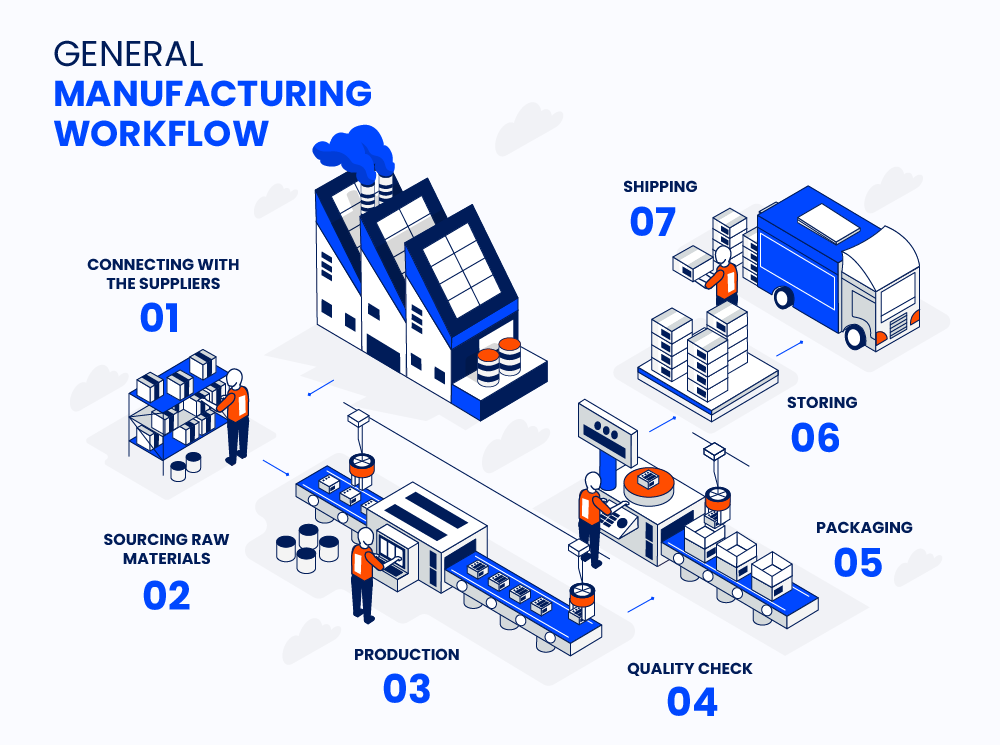
Chapter 8. Supply Chain and Delivery Assurance Plan (2026)
In night vision manufacturing, production capability alone does not guarantee reliable delivery. The coordination of upstream resources, internal production, and outbound logistics determines the stability of supply.
For 2026, our supply chain and delivery plan aims to reduce uncertainty. We will protect confirmed orders and keep lead times steady, no matter the market conditions.
8.1 Core Component Supply Strategy
Core components, particularly image intensifier tubes and critical structural parts, are managed under a priority-based supply framework.
Key measures include:
- Planned sourcing and internal allocation for key optical and mechanical components
- Advance reservation of materials aligned with monthly production capacity
- Buffer management focused on components with longer replenishment cycles
This approach ensures that component availability does not become a bottleneck during peak demand periods.
8.2 Supplier Management and Material Stability
Material stability is a prerequisite for consistent production quality.
In 2026, supplier management emphasizes:
- Long-term cooperation with qualified material suppliers
- Reduced reliance on short-term or spot sourcing
- Regular review of material consistency to prevent batch variation
By maintaining a stable supplier base, manufacturing processes remain predictable and quality variation is minimized.
8.3 Internal Production and Inventory Coordination
Internal coordination between production and inventory management is critical for delivery reliability.
Key practices include:
- Clear distinction between order-based productionand inventory-based production
- Defined inventory thresholds for ready-to-ship products
- Regular review of production flow to prevent overstock or shortages
This coordination supports both project-based deliveries and shorter lead-time requirements without disrupting overall production rhythm.
8.4 Delivery Planning and Lead-Time Control
Delivery planning in 2026 is based on realistic capacity assessment rather than optimistic projections.
Core principles include:
- Lead times aligned with confirmed production schedules
- Prioritization of deliveries based on order confirmation and component readiness
- Transparent communication of delivery expectations at early stages
This approach reduces last-minute adjustments and improves on-time delivery performance.
8.5 Risk Management and Contingency Planning
Recognizing external uncertainties, the 2026 plan incorporates basic contingency measures.
These include:
- Capacity buffers for critical components
- Flexible rescheduling within defined production windows
- Alternative sourcing pathways where feasible
While risks cannot be fully eliminated, structured planning helps limit their impact on confirmed deliveries.
8.6 Delivery Assurance as a Long-Term Commitment
The 2026 supply chain and delivery assurance plan reflects a broader commitment:
reliable delivery is the result of disciplined planning, not reactive adjustments.
We want to align suppliers, production, and delivery under one system. This will give professional buyers a reliable base for long-term purchasing and cooperation.
Chapter 9. Looking Ahead: Cooperation in 2026
As the night vision market grows, cooperation models are changing. They are moving from short-term deals to longer-term partnerships. From a manufacturing view, 2026 is not just about how much we produce. It is also about matching our capacity, quality, and delivery goals with partners who have a long-term vision.
In 2026, we aim to work more closely with partners who value:
- Stable and repeatable product performance
- Clear production planning and realistic lead times
- Transparent communication throughout the manufacturing cycle
Rather than focusing solely on order volume, we place greater emphasis on order clarity, continuity, and mutual planning discipline
9.1 Types of Partners We Aim to Support
Our 2026 production framework is best suited for:
- Professional distributors with structured procurement schedules
- OEM partners seeking consistent component supply and system integration
- Institutional and project-based buyers requiring predictable delivery and traceability
These cooperation models allow manufacturing resources to be allocated more efficiently while maintaining quality consistency.
9.2 How Production Planning Supports Long-Term Cooperation
By sharing our annual production plan, we aim to:
- Help partners align their procurement timelines with our manufacturing rhythm
- Reduce uncertainty around capacity availability
- Enable earlier technical and configuration alignment
Early-stage communication allows both sides to reduce risks and avoid unnecessary adjustments later in the production cycle.
9.3 A Manufacturing-Driven View of Partnership
From our perspective, a successful partnership is built on:
- Defined specifications and confirmed configurations
- Respect for production constraints and scheduling logic
- Continuous feedback that supports process improvement
This manufacturing-driven approach helps ensure that cooperation remains sustainable beyond individual orders.
Chapter 10. Conclusion
The 2026 night vision production plan shows our commitment. We focus on organized manufacturing. We aim for steady growth and reliable delivery.
By focusing on:
- Stable monthly output for image intensifier tubes
- Balanced allocation between standard production, customization, and inventory availability
- Disciplined assembly, testing, and supply chain coordination
we aim to provide professional buyers with a reliable manufacturing foundation rather than short-term capacity promises.
As a manufacturer in China, we understand our responsibility. We supply key parts and complete systems to partners around the world. Transparency in planning, consistency in execution, and realism in commitments remain the principles guiding our approach in 2026.